Why Variable Speed Compressor Inverters Fail After Christmas Shutdown
Published: December 2025 | Technical Advisory
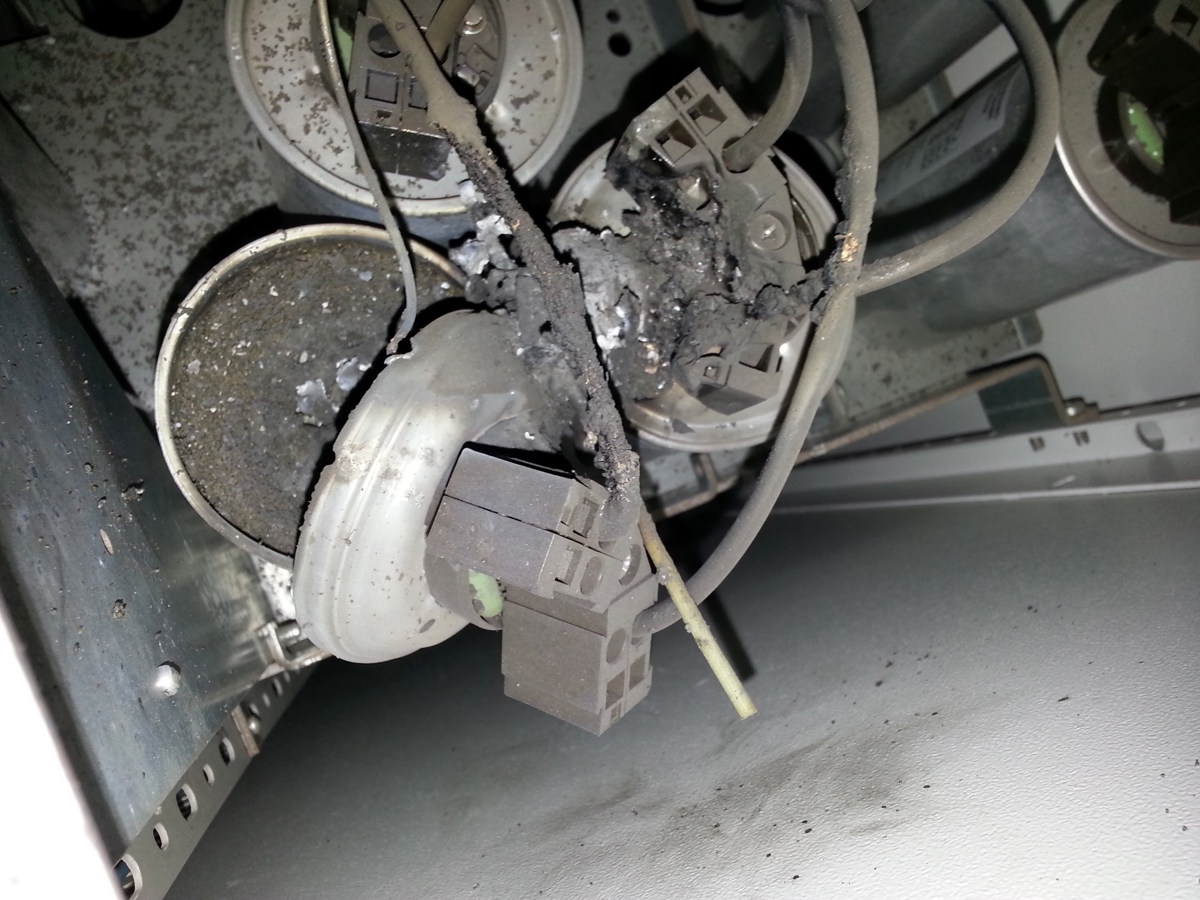
Every January, we see the same pattern: UK manufacturers restart production after the Christmas shutdown, and within the first week, a wave of variable speed compressor failures hits facilities across the country. Not mechanical failures - inverter failures. Specifically, DC bus capacitor failures in variable frequency drives (VFDs) that are 5-8 years old.
If you operate variable speed air compressors, chillers, pumps, or any VFD-driven equipment that's been idle over Christmas, this post could save you £10,000+ in emergency repairs and a week of production downtime.
The Pattern: Why January Is Inverter Failure Season
The scenario:
- Equipment powered down: December 23rd
- Facility unheated and idle: 10-14 days
- Power-up attempt: January 2nd
- Result: Inverter trips on fault, or worse - loud bang, smoke, dead inverter
Why does this happen?
It's not the shutdown itself. It's the combination of factors that create a perfect storm for capacitor failure:
1. Extended Discharge Period
When an inverter is powered down, the DC bus capacitors discharge completely within hours. For a typical 7-day shutdown, this is manageable. But 10-14 days creates additional stress:
- Electrolytic capacitors don't like sitting discharged - The dielectric film degrades when there's no voltage applied for extended periods
- Chemical changes occur - Electrolyte composition shifts, increasing internal resistance (ESR)
- Capacitor "memory" effect - Long discharge periods make subsequent charging more stressful
2. Pre-Charge Circuit Degradation
All VFDs have a pre-charge circuit - typically a resistor bank that gradually charges the DC bus capacitors before the main contactor closes. This prevents massive inrush current.
The problem: Pre-charge resistors are the weak link. They:
- Operate at high temperatures (often 100°C+)
- See repeated thermal cycling
- Gradually increase in resistance
- Eventually fail open-circuit
On a 5-7 year old inverter, there's a high probability the pre-charge circuit is degraded or completely failed. You just don't know it until you try to power up after an extended shutdown.
Without a functioning pre-charge circuit: When you close the main contactor, the entire mains voltage (400V AC = ~565V DC) tries to charge the capacitors instantly. The inrush current can be 50-100 times normal operating current.
3. Cold Ambient Temperature
Unheated facilities over Christmas means cold inverters. Electrolytic capacitors perform poorly when cold:
- Higher ESR when cold - More internal resistance = more heat during charging
- Reduced capacitance - They can't absorb the inrush current as effectively
- Mechanical stress - Sudden heating from room temperature to 60-80°C in milliseconds
Industrial-grade capacitors are typically rated for -40°C to +85°C (or +105°C for premium units). But the rate of temperature change during cold start is outside normal operating specs.
4. Moisture and Condensation
Unheated facilities = condensation. Particularly in the UK's damp winter climate.
What happens:
- Moisture condenses inside inverter enclosures overnight
- Water droplets form on circuit boards and capacitor terminals
- When you power up, moisture provides conductive paths
- Leakage currents stress capacitors
- In extreme cases: direct short circuits
Inverters typically have IP54 or IP55 enclosures, which is fine for normal operation. But 14 days of temperature cycling in a humid environment is different.
5. Age-Related Capacitor Degradation
Why 5-8 years specifically?
Electrolytic capacitors have a design life typically specified as:
- 5,000-10,000 hours at rated temperature (85°C or 105°C)
- Doubles for every 10°C below rated temperature
For a compressor running 5,000 hours/year at 50°C average:
- Expected life: ~10-15 years
- But... that assumes steady-state operation
What actually happens:
- Temperature cycling reduces life by 30-50%
- High ripple currents cause internal heating
- Poor ventilation/cooling accelerates aging
- By year 5-7, ESR has doubled or tripled
The capacitors are still working, but they're significantly weakened. A normal restart is fine. An extended cold shutdown with failed pre-charge? That's the breaking point.
Real-World Failure Pattern
What you'll see:
Scenario 1: Immediate trip on power-up
- Close main power switch
- Loud bang or pop
- Fault code: "DC bus overvoltage" or "Hardware fault"
- Visual inspection: Bulging or burst capacitors
- Repair cost: £5,000-£8,000 + 3-5 days downtime
Scenario 2: Delayed failure
- Powers up successfully
- Runs for 30 seconds to 2 hours
- Trips on "DC bus overvoltage" or "overcurrent"
- Capacitors have failed but not catastrophically
- Inverter continues to operate degraded until thermal runaway
Scenario 3: Cascade failure
- One capacitor fails
- Remaining capacitors take increased load
- Second capacitor fails within hours/days
- DC bus ripple increases
- IGBT modules damaged by excessive voltage ripple
- Total inverter replacement required: £10,000-£15,000
Prevention Strategies
For This Week (Emergency Measures)
If you're reading this before January restart and you have 5+ year old VFD equipment:
1. Pre-startup Inspection
- Remove inverter covers
- Visually inspect DC bus capacitors
- Look for:
- Bulging tops (domed instead of flat)
- Leaking electrolyte (brown/orange stains)
- Cracked casings
- Loose terminals
- If any signs present: Replace before power-up
2. Pre-Charge Circuit Check
- Locate pre-charge resistors (usually 30-100Ω, 50-100W ceramic resistors)
- Measure resistance with multimeter (power OFF)
- Should read within 10% of rated value
- If open-circuit or >20% high: Replace before restart
3. Controlled Power-Up Procedure
- If possible, enable inverter soft-start mode
- Power up without load connected
- Monitor DC bus voltage rise (should be gradual, ~2-5 seconds)
- Listen for unusual sounds (clicking, buzzing = problem)
- Check inverter temperature after 10 minutes (should be warm, not hot)
4. Temperature Management
- If facility has been unheated, warm inverter gradually
- Small heater near enclosure for 2-4 hours before startup
- Avoid thermal shock
Long-Term Solutions
1. Keep Equipment Energized During Shutdowns
The single best prevention: Don't fully power down inverters during shutdowns.
Implementation:
- Install isolation switches before VFD input
- During shutdown: Stop compressor, leave VFD powered
- DC bus stays charged, no inrush stress
- Added benefit: Prevents condensation (inverter generates small amount of heat)
Cost: Minimal - perhaps £20-50 in standby power for a 2-week shutdown Benefit: Eliminates 90% of post-shutdown failures
2. Enclosure Environmental Control
For critical equipment:
- Install enclosure heaters (50-100W, thermostat-controlled)
- Maintain 10-15°C minimum in inverter enclosure
- Prevents condensation
- Keeps capacitors in optimal temperature range
Cost: £100-200 per enclosure Payback: One prevented failure pays for 10+ years of heating
3. Scheduled Capacitor Replacement
Don't wait for failure. Replace DC bus capacitors preventatively:
Recommended schedule:
- 5 years: Inspection and ESR measurement
- 7 years: Replace as preventive maintenance
- 10 years: Mandatory replacement
Cost: £500-£1,500 depending on inverter size vs Emergency replacement: £5,000-£8,000 + downtime costs
4. Implement Predictive Monitoring
Modern solutions can detect capacitor degradation before failure:
What to monitor:
- DC bus ripple voltage (increases as capacitors degrade)
- DC bus charging time (increases as pre-charge circuit degrades)
- Capacitor temperature (IR thermography)
- Vibration (degraded capacitors vibrate more at 100/120Hz ripple frequency)
Industrial IoT solutions (like our Energy Portal LoRa monitoring) can track these parameters and alert before failure occurs.
Why This January Will Be Particularly Bad
Three factors converging:
1. Equipment Age Demographic
- Lot of capital investment in 2017-2018 (post-recession recovery)
- That equipment is now 6-7 years old
- Right in the failure zone
2. Extended Shutdown
- Many facilities closed December 20th-21st
- Not reopening until January 2nd-6th
- 14-16 day shutdown vs typical 7-10 days
3. Cold Winter
- Facilities have been colder than usual
- More condensation risk
- Capacitors starting from lower temperatures
Prediction: 15-20% increase in inverter failures vs typical January, concentrated in week 1-2 of restart.
What To Do If Failure Occurs
Immediate actions:
- Isolate the equipment - Don't attempt repeated restart attempts
- Document the fault - Note fault codes, any sounds/smells, visual damage
- Take photos - Useful for supplier/engineer diagnosis
- Check warranty - Some inverters have 5-7 year warranties
Repair vs Replace Decision:
Repair if:
- Only capacitors failed (no IGBT damage)
- Inverter <8 years old
- Original manufacturer parts available
- Cost <40% of replacement
Replace if:
- Cascade failure (capacitors + IGBTs + driver boards)
- Inverter >8 years old
- Obsolete model (parts unavailable)
- Repair cost >50% of modern equivalent
Modern VFDs offer:
- Better efficiency (1-2% improvement = £500-£2,000/year savings)
- Improved diagnostics
- Network connectivity
- Better harmonic performance
Sometimes a failure is an opportunity to upgrade.
The Energy Monitoring Angle
This failure pattern highlights why continuous monitoring is valuable:
What monitoring would have caught:
- Pre-charge circuit degradation (increased DC bus charging time)
- Capacitor aging (increased ripple voltage)
- Environmental issues (temperature/humidity trends)
- Usage patterns that accelerate wear
Our Energy Portal service tracks power quality parameters that correlate with inverter health. It's designed for energy optimization, but the data also reveals equipment degradation before failure.
Example: A client's compressor showed gradually increasing power factor variation over 6 months. Investigation revealed DC bus capacitor degradation. Scheduled replacement during planned maintenance, zero unplanned downtime.
Summary: Action Points
This week (if equipment is still offline):
- [ ] Inspect 5+ year old VFD equipment
- [ ] Check for bulging/leaking capacitors
- [ ] Test pre-charge resistor values
- [ ] Plan for gradual warm-up before restart
January (if already running):
- [ ] Monitor closely for first 2 weeks
- [ ] Any unusual noises/faults = immediate inspection
- [ ] Document baseline performance for comparison
Long-term (prevent future issues):
- [ ] Keep inverters powered during shutdowns
- [ ] Install enclosure heating where critical
- [ ] Schedule 7-year capacitor replacement
- [ ] Consider predictive monitoring systems
Final Thoughts
January inverter failures aren't random bad luck - they're predictable, preventable, and entirely avoidable with proper understanding and planning.
The manufacturers who understand this pattern:
- Plan preventive replacement during scheduled downtime
- Keep equipment energized during shutdowns
- Monitor equipment health continuously
- Experience zero unplanned failures
The manufacturers who don't:
- Emergency callouts in January
- £8,000-£15,000 unexpected costs
- Week of production downtime
- Rush freight for parts
- Blame "bad equipment"
It's not bad equipment. It's predictable physics and preventable failure modes.
2026 goal: Zero post-shutdown inverter failures because you were prepared.
About Industrial Control Services
We provide energy monitoring and management services for UK manufacturers, with particular expertise in LoRa wireless sub-metering, power quality analysis, and equipment health monitoring.
Our Energy Portal platform tracks the parameters that indicate equipment degradation before failure - saving money through both energy optimization and avoided downtime.
Based in Staffordshire, working with manufacturers across the Midlands and throughout the UK.
Contact:
- Email: [email protected]
- Phone: 07415 798544
- Tools: Free Energy Calculators
Disclaimer: This article provides general technical guidance based on field experience. Specific equipment may vary. Always consult manufacturer documentation and qualified engineers for your specific application. Safety first - work on electrical equipment should only be performed by qualified personnel with appropriate isolation and safety procedures.
Get Your Free Energy Assessment
Find out how much you could save on electricity costs with smart meters and LoRa wireless monitoring.
Contact Us Today